Spot the Signs: How to Tell If Your Boat’s Transom Is Rotting
Boat transom rot can develop out of sight while weakening the structure that supports your engine and helps keep your vessel stable. This is written for boat owners who want to recognize early signs of transom damage before a small problem turns into a costly repair. The perspective reflects Straight Line RV & Boat’s experience with boat collision repair and structural damage in Buckeye, Arizona, and Springfield, Oregon. It covers common warning signs of a rotting transom, why early detection matters, and when professional inspection and repair may be needed.
Straight Line RV & Boat — Collision Repair & Paint Experts
Buckeye AZ & Springfield OR
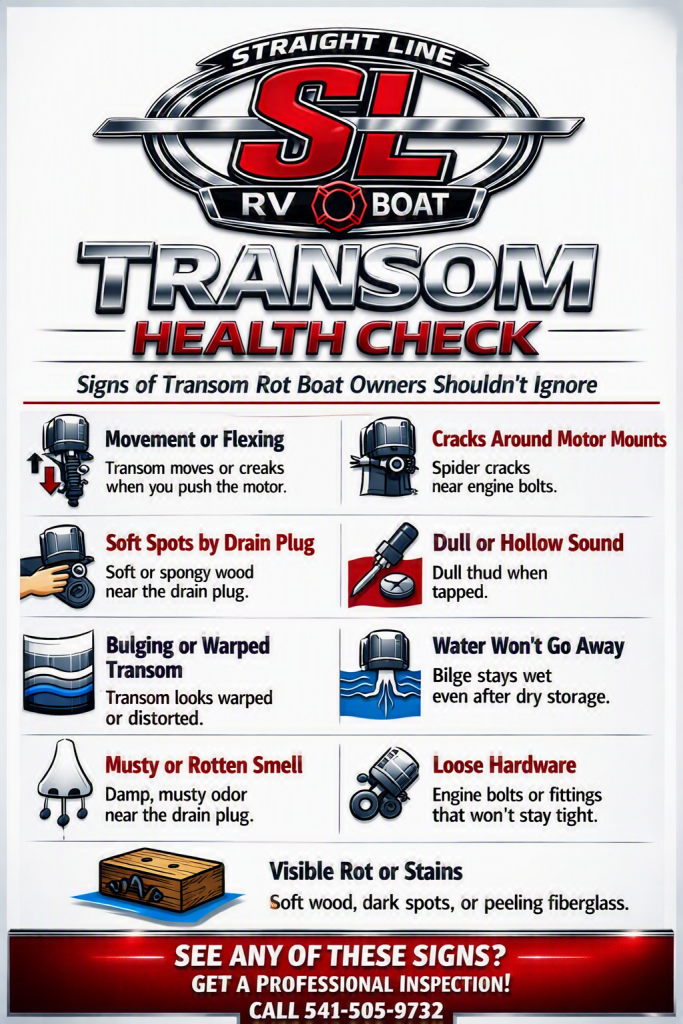
Your boat’s transom is the backbone of your vessel — it supports the engine, reinforces the hull, and keeps everything stable on the water. When rot begins to form inside that structure, it can lead to serious safety issues and expensive repairs.
At Straight Line RV & Boat, we’ve seen how hidden transom damage can sneak up on even the most careful boat owners. Here’s how to spot the warning signs early and protect your investment.
1️⃣ Flexing or Movement When You Push the Motor
If the transom moves, creaks, or flexes when you rock the outboard, the internal wood core may be soft or delaminated. A solid transom should feel rigid — any movement means structural compromise.
2️⃣ Cracks Around Motor Mounts
Spider cracks around engine bolts are more than cosmetic. They often indicate the transom is flexing under load, a clear sign of internal weakness.
3️⃣ Soft Spots Near the Drain Plug
Rot loves moisture. Probe around the drain plug — if the wood feels soft, spongy, or crumbly, water has already infiltrated the core.
4️⃣ Dull or Hollow Sound When Tapped
Tap the transom with a screwdriver handle. A crisp “tock” means solid wood; a dull “thud” means rot or separation between layers.
5️⃣ Bulging or Warped Transom Skin
Look along the back of the boat. If you see delamination (a bulge or dish shape), it indicates the core has swollen or lost its bond with the fiberglass.
6️⃣ Water That Won’t Go Away
If your bilge stays wet even after days on the trailer, the transom may be holding water internally — a sure sign of saturation.
7️⃣ Musty or Rotten Smell
A damp, earthy odor near the stern is a telltale sign of decaying wood inside the transom.
8️⃣ Loose Hardware
Bolts, tie‑downs, or ladder mounts that won’t stay tight are often pulling against soft wood instead of solid structure.
9️⃣ Visible Rot or Stains
Dark spots, peeling fiberglass, or soft wood around the stern mean the rot has reached the surface — and it’s time for professional repair.
Why Early Detection Matters
A rotten transom can cause:
- Engine mounting failure
- Hull separation under load
- Costly structural repairs
Catching it early saves thousands — and keeps you safe on the water.
Professional Transom Inspection
Buckeye, AZ or Springfield, OR
If you notice any of these signs, don’t wait — call 541‑505‑9732 for a professional inspection today.